We have never found a tool that is so easy to customize for multiple users with different levels of access at Budgyt's price point.
A budgeting approval workflow routes each budget from department draft through finance review and sign-off to a locked, recorded version.
When approvals happen over email and shared workbooks, finance loses track of which version is final and who agreed to it. Budgyt routes each budget through review and sign-off, locks the approved version, and keeps a record the board and auditors can follow. When funding changes, finance reopens a controlled reforecast rather than editing the original.
Trusted by nonprofit finance teams managing multi-department approvals.

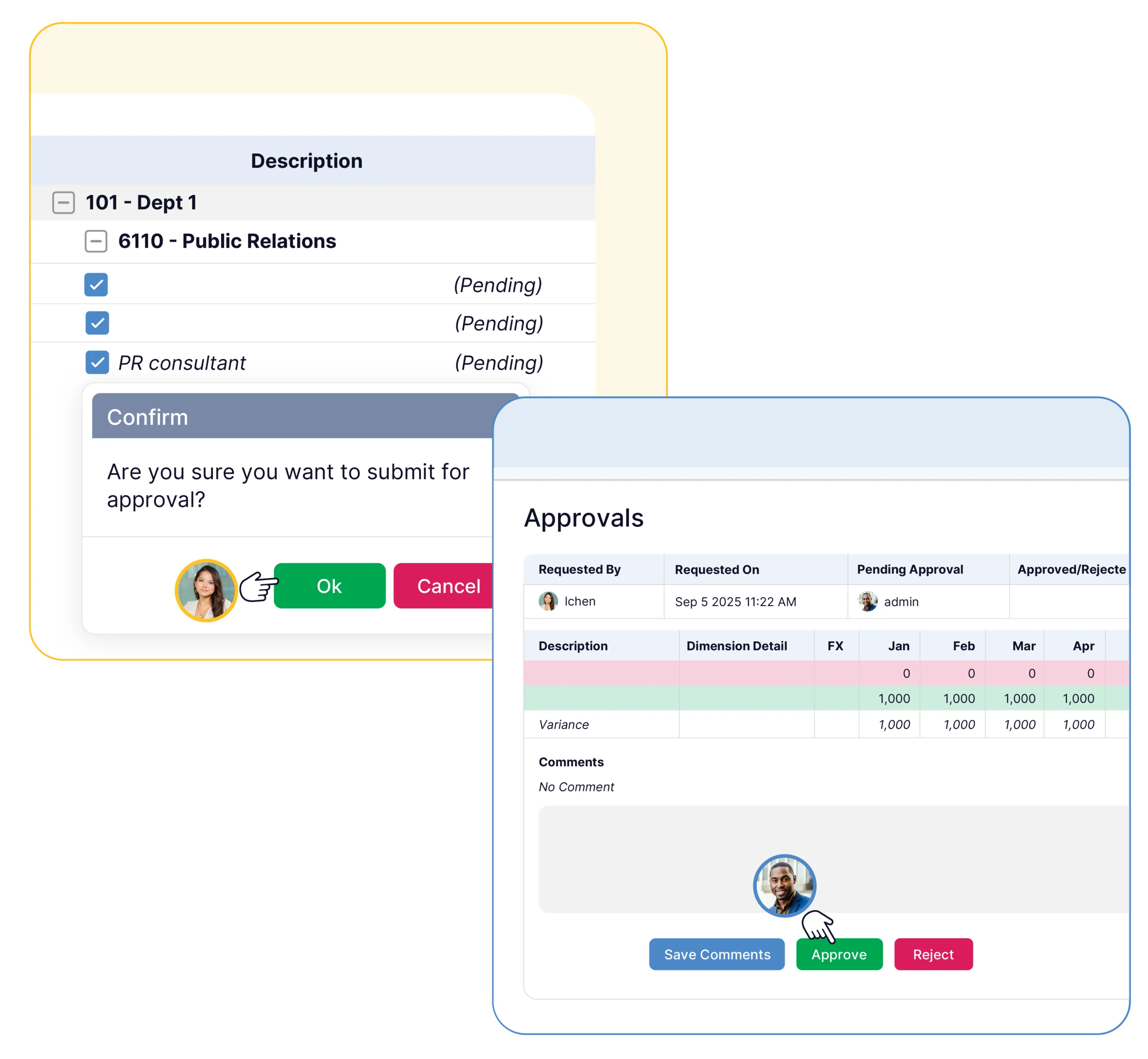
Each budget follows the same path, and everyone can see where it stands. Finance owns the sequence from draft through sign-off and locking.
Email approvals leave finance reconstructing who agreed to what from a thread of attachments. Budgyt keeps the request, the comments, the approval, and the lock in one place.
| Step | Manual Approach | In Budgyt |
|---|---|---|
| Submit budget | Email a workbook to finance | Submit in the platform |
| Track changes | Compare file versions by hand | Tracked change history |
| Request edits | Reply with notes | Comments on the budget |
| Approve | Verbal or email sign-off | Recorded approval |
| Lock | Hope no one edits the file | Version locked after approval |
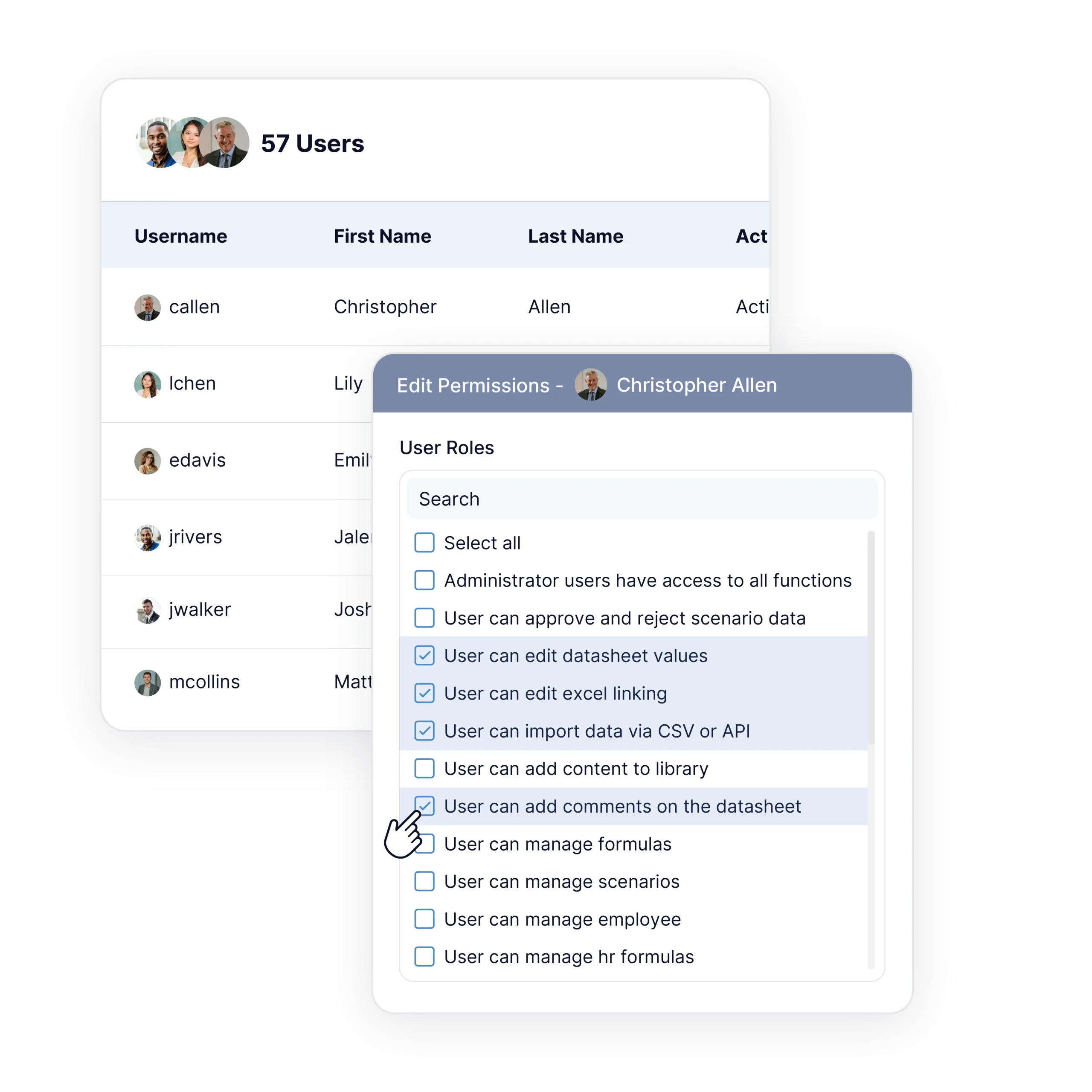
Approval rights follow role-based permissions. Finance decides which roles can submit a budget, which can review it, and which can give final approval, and each action is tied to a named user.
Program heads submit their own departments and finance reviews them in one place, with unlimited users included. Collaboration runs through the workflow rather than around it in side conversations.
Grants and funding rarely hold steady through the year. When numbers change, finance opens a reforecast, contributors update their departments, and the revised plan goes through the same review and approval path. This connects closely to rolling forecasts.
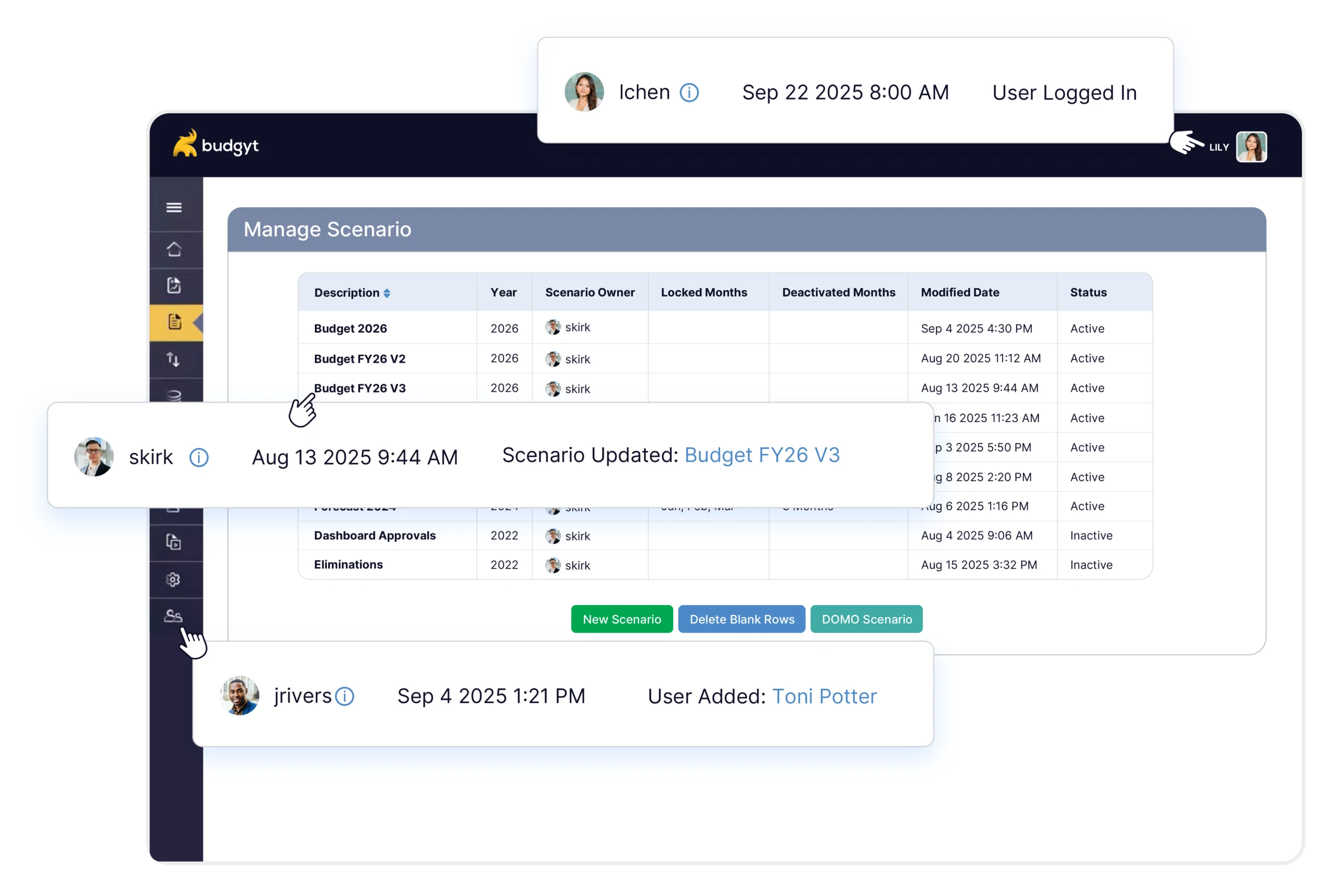
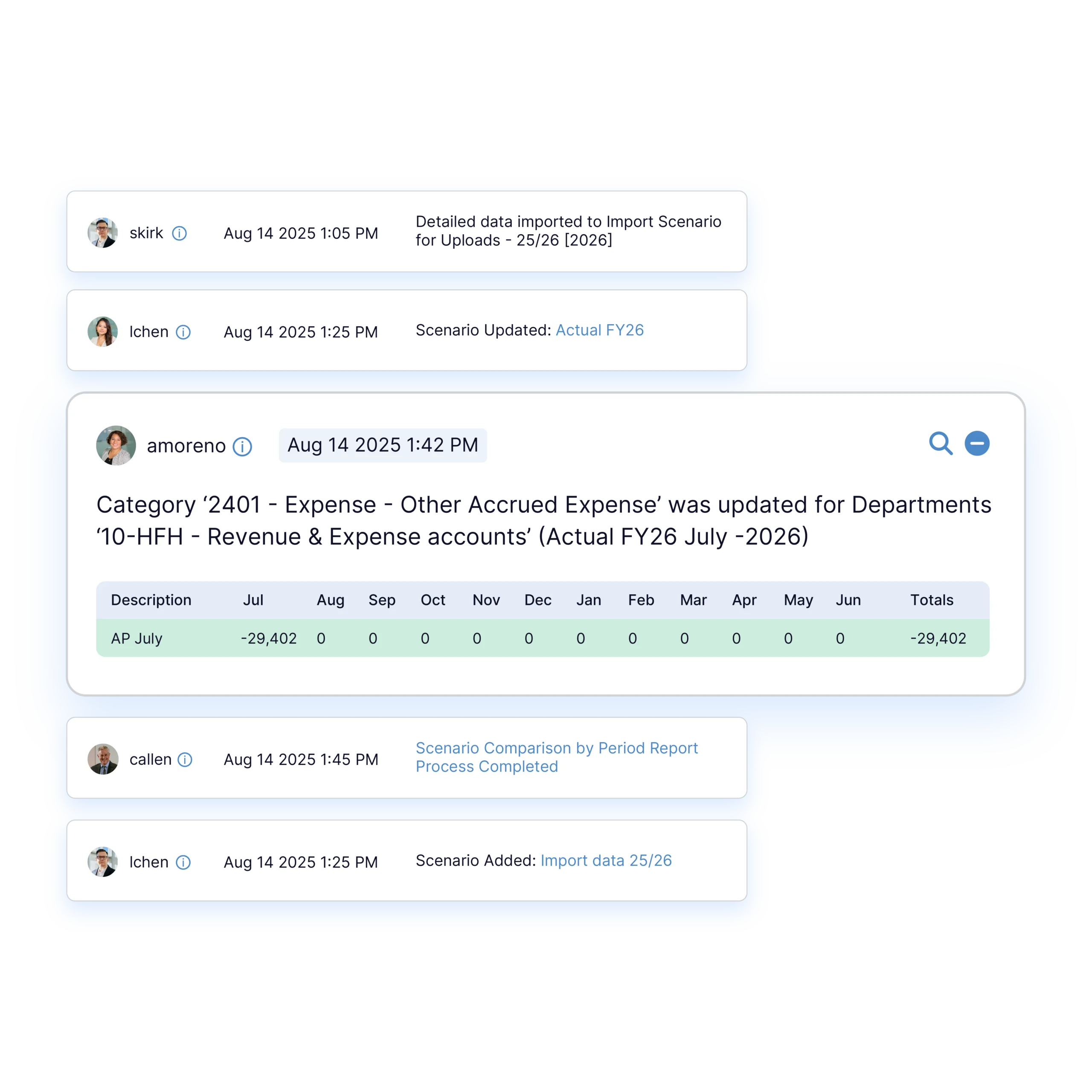
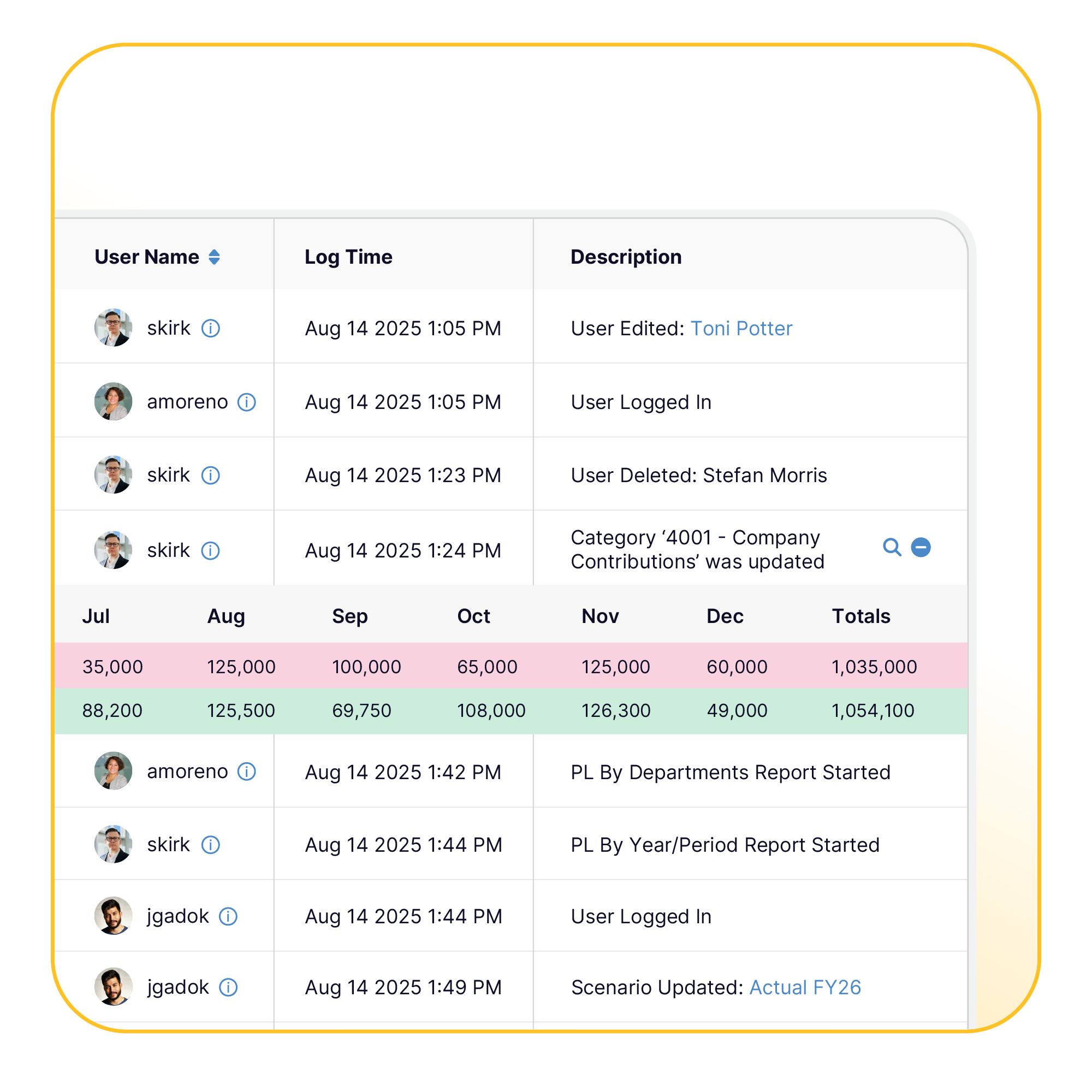
Approvals are recorded with the approver and date, and locked budgets cannot be changed without finance reopening them. The same record supports board reporting and audit, and it ties back to live financial planning and grant-funded budgeting.
Finance defines the approval path during onboarding, and every budget follows it from then on. Most teams are set up in about two weeks with our help.
Setting up approvals does not require a technical project or outside consultants. A Budgyt specialist helps map your steps during onboarding, and finance can adjust them later without IT.
Why Finance Teams Replace Manual Approvals
We have never found a tool that is so easy to customize for multiple users with different levels of access at Budgyt's price point.
We adopted Budgyt as a budgeting solution to replace Excel, but it has become so much more than that. It’s our tool of choice for budgeting, forecasting, and analysis, and it is incredibly accessible and easy.
We've eliminated the distribution of monthly reports and budget information by e-mail or spreadsheet and simply have our recipients login to Budgyt.
We love that there are no limits to number of users.
A department drafts its budget and submits it, finance reviews and approves or requests changes, and the approved version is locked for the cycle. Each step is recorded.
Access follows role-based permissions. Finance decides which roles can submit, which can review, and which can give final approval, and each action is tied to a named user.
Not without finance reopening it. A locked version stays fixed until finance opens a controlled reforecast.
Yes. Each approval is recorded with the approver and date, alongside a tracked history of changes.
Finance opens a reforecast, contributors update their departments, and the revised plan goes through the same review and approval path.
Yes. Submission, comments, approval, and locking happen in one place instead of across email threads and shared workbooks.