
Grant Allocation
Multi-grant payroll splits with restricted funds tracked natively
When 70% of your nonprofit budget is payroll split across multiple grants, you need software that handles real allocation work, and most budgeting tools at this price point can’t. The ones that do start at $25,000 a year and take six months to procure.
FP&A capability that fits under most nonprofit procurement thresholds.








Above $10,000, most nonprofits hit a formal three-bid RFP, board sign-off, and a procurement committee that meets quarterly.
The dollars are only part of the cost. Evaluation drags on for six months while your team keeps rebuilding the same Excel file every grant cycle, the procurement document forces three vendors to compete even when you already know which one fits, and the recommendation slips to next quarter’s board meeting because there was never time to prepare it for this one.
Budgyt starts at $399/month, $4,788/year. For nonprofits, that’s well below the threshold, and the evaluation, approval, and onboarding can happen inside a normal budget cycle.
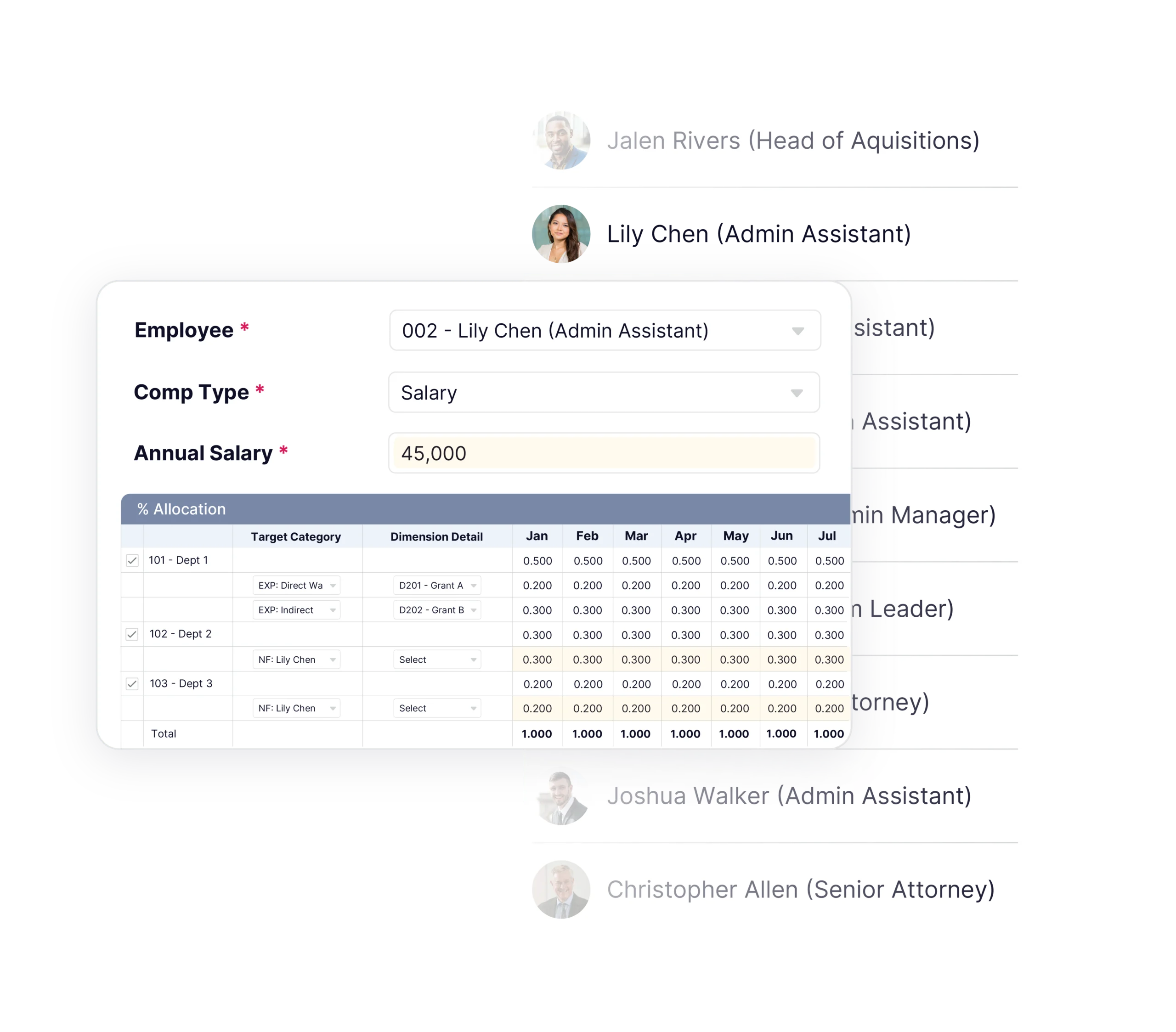
When 70% of a nonprofit’s budget is payroll split across multiple grants, the hard part is the allocation rather than the budget itself. Each salary gets divided by the grant percentage, restricted and unrestricted lines have to stay separate, and all of it has to hold up to an auditor.
That’s where Excel starts to fall apart, and where most affordable budgeting software stops being useful. Tools at the lower end of the market handle department budgets well enough, but not grant-by-grant payroll splits, mid-year funding changes, or the audit trail a funder needs to see.
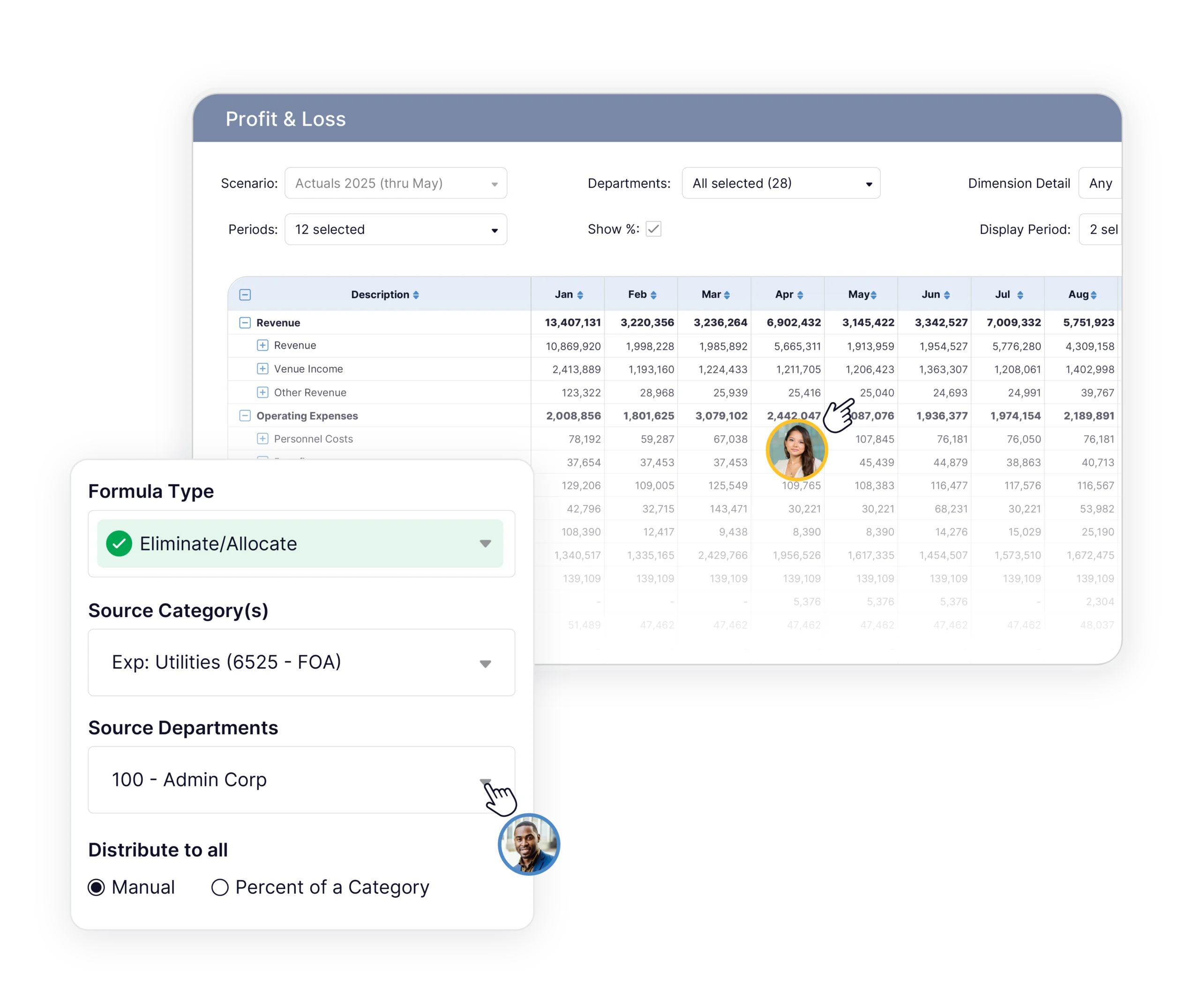
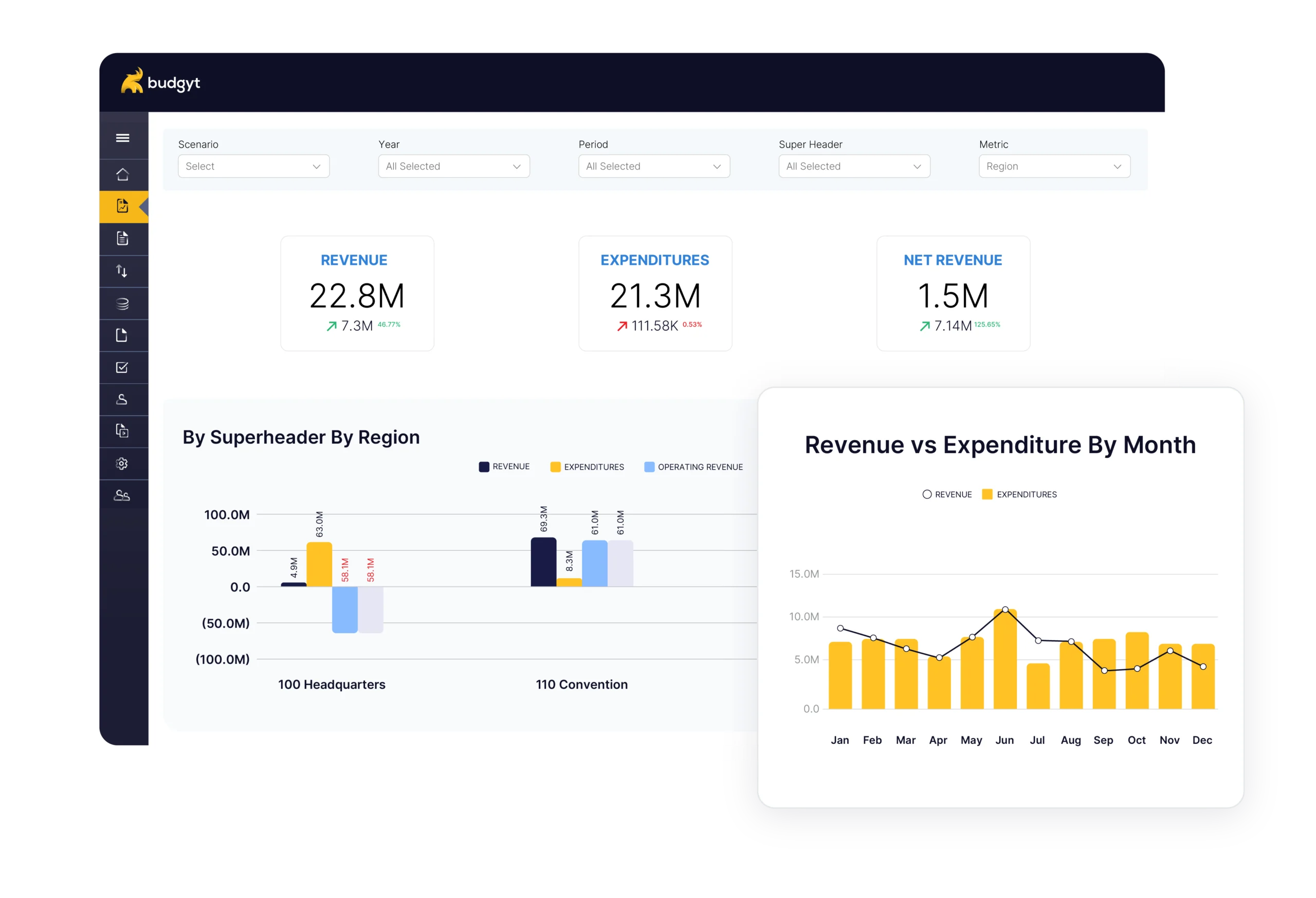
Most budgeting tools under $10,000 reach that price by leaving things out. The gaps worth checking for before you buy are grant-by-grant payroll allocation, restricted fund tracking, an audit trail an auditor will accept, and unlimited users rather than per-seat pricing. Budgyt is built to cover all four at the nonprofit rate, which is what separates it from general low-cost budgeting tools.
For the grant allocation depth specifically, see grant budgeting software.
Price is only the starting point at this end of the market. These are the questions that separate a tool that fits from one you outgrow in a year:
For a full cost breakdown by department count see our pricing calculator or download the board budget checklist to take into your approval conversation.
Enterprise FP&A platforms in the $20–35K range are built for organizations with a dedicated FP&A function. Most nonprofits don’t have one, and don’t need to pay for the overhead that comes with it.
Below $10K, Budgyt gives you the structural capability that nonprofit finance depends on:
Multi-grant payroll splits with restricted funds tracked natively
Every number traceable to transaction level, every change logged
Three months actual, nine months forecast, refreshed as funding shifts
Unlimited users across programs and entities, with role-based permissions
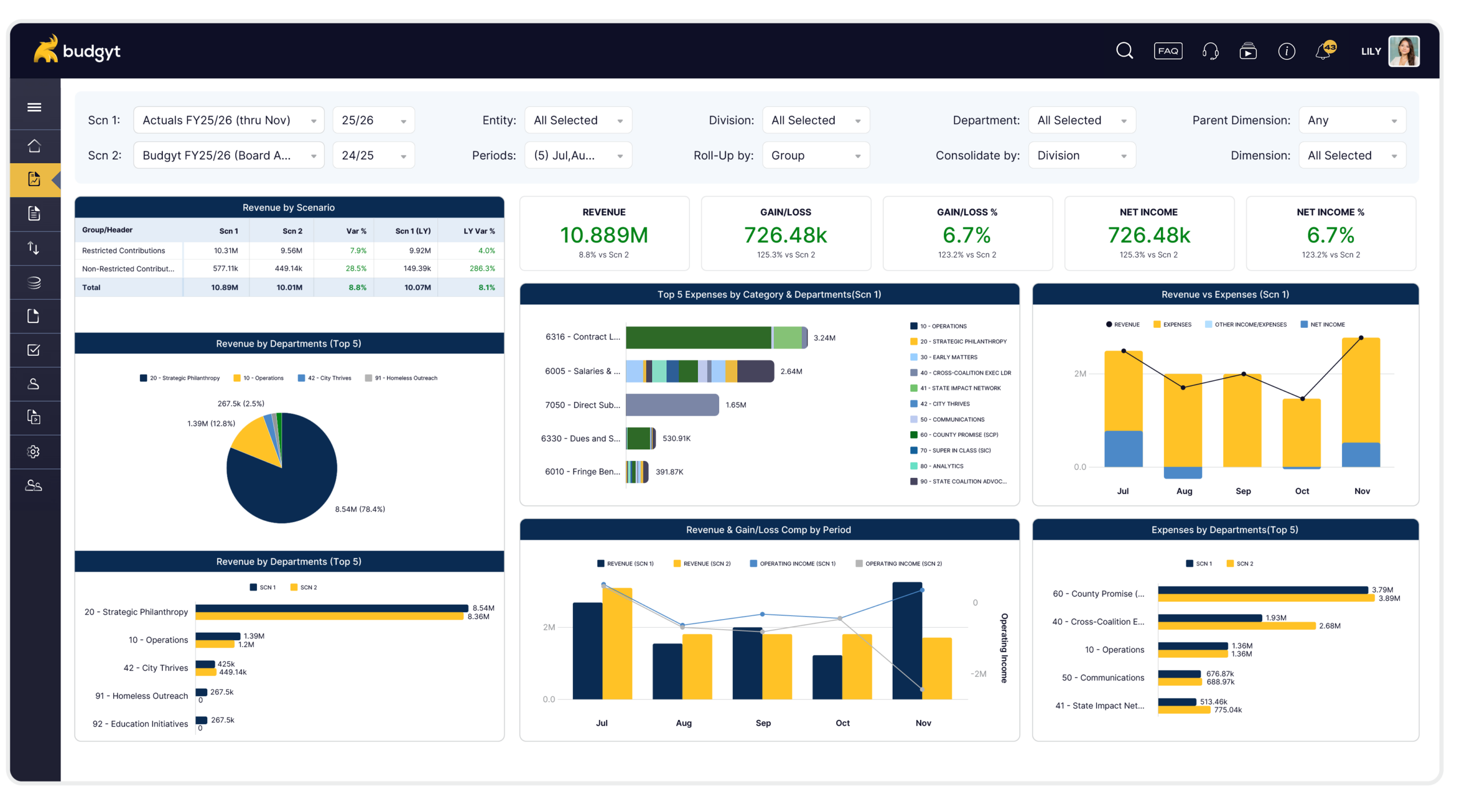
Consolidated views with variance commentary, ready for the meeting
Direct sync with QuickBooks, NetSuite, Sage Intacct, and Business Central
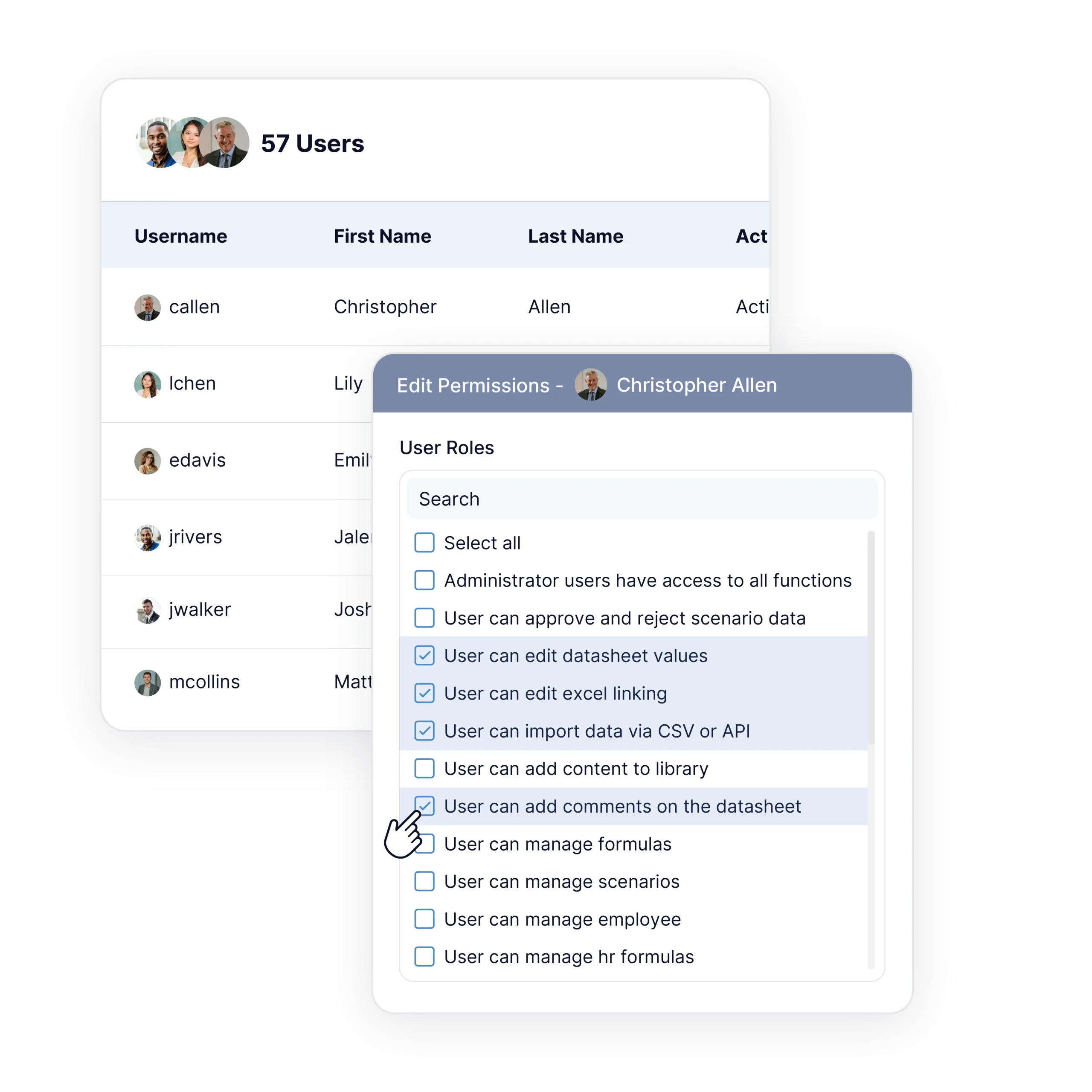
For nonprofits running multiple programs or departments, the budget process should involve the people closest to the work. Program directors who know their staffing needs, department heads who understand their costs, and finance owning the consolidation and reporting, all need a seat in the system.
That collaboration breaks down quickly when budgeting software charges per user. Adding ten program directors at $50 a seat tips an “affordable” platform over $10,000 fast.
Unlimited users at a flat rate means everyone who should be in the budget can be in the budget, with role-based permissions controlling what each person sees.
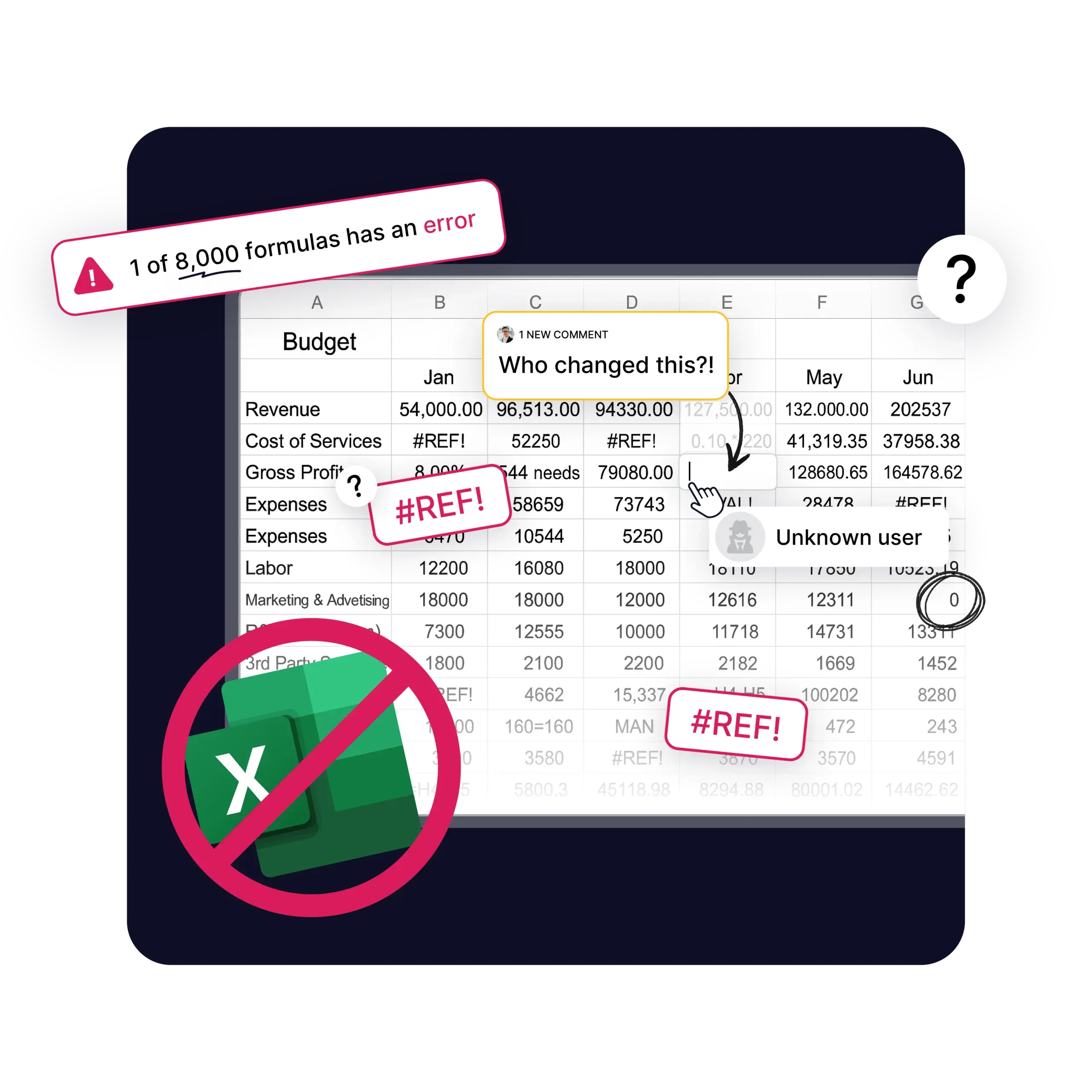
If your spreadsheet model is the source of your budget, every month spent procuring better software is a month of formula maintenance, audit risk, and weekend rebuilds.
A typical nonprofit finance team spends hours rebuilding the budget after a major funding change. Multiply that across the three or four funding changes you’ll see in a year, and you’re losing two full weeks of finance director time to a fixable problem that costs less to fix than it costs to leave alone.
The path most of our customers take:
For organizations with stricter procurement rules even under threshold, we provide everything you need: security documentation, references from comparable nonprofits, and a written implementation plan.
| Budgyt | Enterprise FP&A ($25K+) | |
|---|---|---|
| Annual cost | From $4,788 | $25,000–$35,000 |
| Implementation time | ~2 weeks | 3–6 months |
| Procurement process | Below most thresholds | Full RFP, board approval |
| User pricing | Unlimited | Per-user, often $1,500+ each |
| Multi-grant allocation | Standard | Often custom-configured |
| Suitable for | 20–500 person nonprofits | $50M+ revenue organizations |

Both our finance team and our budget discussions have been dramatically more efficient. Automatic consolidation on the cloud allows our decision makers to view bottom-line impacts in real-time for much more strategic business planning.
We rely on a flexible approach to managing our finances, so it is critical to have data organized and presented the way we need it. Budgyt is highly customizable and can fit most, if not any, account structure.
Budgyt provides our leaders with an easy, self-service interface for their financial data. It empowers them to do their own analysis and saves the finance team a lot of time answering questions.
No. Thresholds vary by organization. Some are as low as $5,000, others as high as $25,000. Check your finance policy or ask your CFO. Budgyt’s annual cost falls under most thresholds we see.
Software purchases below procurement threshold typically don’t require board approval. Above threshold, most boards expect a formal recommendation. Below, the finance director usually has discretion.
QuickBooks is an accounting system that records what already happened. Budgyt is a budgeting and forecasting platform that integrates with QuickBooks and handles the planning side: grant allocation, rolling forecasts, scenario planning, and board reporting. The two work together.
Enterprise platforms like Adaptive, Vena, and Anaplan are built for finance teams with dedicated FP&A staff and the budget for $25,000-plus a year. Budgyt covers the budgeting, forecasting, and reporting most nonprofits actually use, at a price a finance director can approve directly.
Most affordable budgeting tools handle department-level budgets but stop at grant allocation, restricted fund tracking, or multi-entity work. Budgyt covers all three at the nonprofit rate.
We offer a free pilot for qualified nonprofits. You’ll work with one of our onboarding specialists to load a real budget into Budgyt before you commit.
Budgyt is cloud-based. There’s nothing to install. Most finance teams onboard without involving IT, though we work directly with your IT team on SSO setup if you use Google, Okta, Azure, or Shibboleth.
Yes. We load any historical budget into Budgyt for variance analysis and walk you through rebuilding it with dynamic drivers. Your historical data comes with you.
Budgyt serves nonprofits up to roughly 500 employees and several hundred million in revenue. If you scale past that, we’ll be straightforward about it. Most of our customers don’t.