When Sarah inherited the budgeting process for a multi-state healthcare network with 12 different entities, she quickly discovered her Excel template wasn’t going to cut it. Each location had its own P&L, department structure, and expense categorization. Within two months, she was maintaining separate spreadsheets that were supposed to roll up into a consolidated view, but never quite did.
Sound familiar?
Multi-entity budgeting is where Excel goes from “occasionally frustrating” to “fundamentally broken.” You’re not managing one budget anymore. You’re managing 5, 10, or 20 different budgets that need to consolidate accurately while maintaining entity-level detail. And every time someone adds a department or changes a cost center, you’re rebuilding formulas instead of analyzing results.
The problem isn’t volume. It’s structural complexity that spreadsheets can’t handle:
Most finance teams build a “master consolidation” spreadsheet linking to entity-level budgets. This works until someone moves a file, breaking all your links. Or you need to add a department to all entities simultaneously, requiring manual updates to each file while maintaining formula consistency.
Then there’s intercompany eliminations. When Entity A sells services to Entity B, you need to eliminate those transactions in your consolidated view. In Excel, this means tracking every relationship manually and building elimination formulas that reference multiple files.
And the permission nightmare? Your Boston manager needs to see Boston’s budget without accessing Seattle’s salaries. Your CFO needs everything. Your department heads need entity-level access but not consolidated data. Excel’s solution is creating multiple file versions with hidden tabs, emailing them to different people, and losing track of which is “real.”
Here’s what happens during budget season:
Each entity builds their budget in their own spreadsheet. Finance collects these files (chasing stragglers who forgot the deadline) and manually copies numbers into a consolidation template. Someone inevitably sent the wrong version. Finance goes back for updated numbers. Meanwhile, consolidation formulas break because someone added a row, shifting all references.
By the time you’ve consolidated everything, you’re not sure the numbers are right because you can’t easily trace figures back to source.
When the board asks “Why is our Northeast region over budget on marketing spend?”, you can’t drill down to see which entity or department is driving that variance. You promise to “get back to them” and spend your evening clicking through linked spreadsheets.
This is where proper rolling forecasts become nearly impossible. Updating forecasts across multiple entities means touching every file, ensuring formulas work, re-consolidating everything, and hoping you didn’t introduce errors. Most organizations give up and stick with static annual budgets because the alternative is too painful.
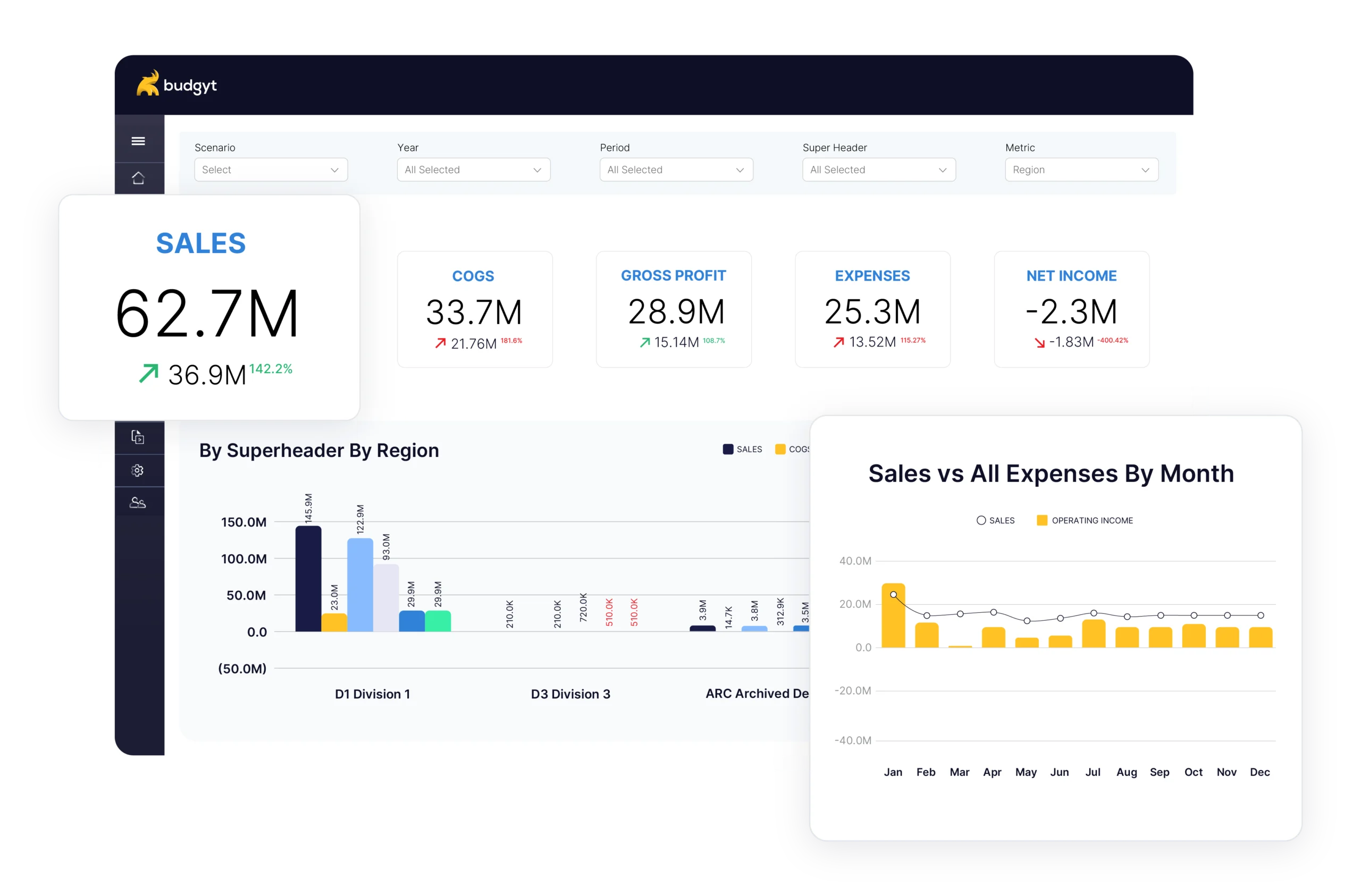
Moving from spreadsheets to database-driven budgeting fundamentally changes what’s possible. Instead of separate files you’re trying to link together, you have one system where entities are different views of the same data structure.
When you build budgets in a database environment, adding a new entity doesn’t mean copying templates and hoping formulas work. You define the entity once, map its departments and accounts, and the structure works automatically. Corporate changes apply universally while entity-specific customizations remain intact.
Automatic consolidation. The database knows which entities belong in which rollups. Intercompany eliminations happen based on rules you define once, not formulas you rebuild quarterly.
Granular permissions. Entity managers see their entity. Regional directors see their region. Finance sees everything including eliminations and consolidations. These permissions stay consistent across budgets, forecasts, and actuals.
Real drill-down capability. When consolidated marketing spend is over budget, you click that variance and immediately see which entities, departments, and expense categories are driving it. No hunting through multiple files.
Consider a professional services firm with offices in five cities. Each office has its own P&L structure, service lines, and overhead allocation methodology. But corporate finance doesn’t maintain five separate Excel files with a sixth consolidation file.
Instead, each office manager logs into their entity’s budget workspace. They see their accounts, departments, and historical actuals. They can build their budget using their preferred methodology, whether that’s detailed driver-based forecasting or simple growth percentages. Their work automatically reflects in the consolidated view the CFO sees.
When the CFO looks at consolidated professional services revenue, she can drill down to see which offices are driving growth:
The firm uses variance analysis to track performance monthly. Each office manager sees their budget-to-actual comparisons with their specific cost allocation methods applied. The CFO sees consolidated actuals that properly eliminate all intercompany transactions.
When Chicago bills Denver for shared services, those revenues and expenses disappear from the consolidated view automatically. No manual tracking required.
Multi-entity organizations aren’t static. You open new locations, close underperforming ones, reorganize service lines, shift resources between entities.
In Excel, each change means:
With database-driven budgeting, structural changes happen once and flow through appropriately. Opening a sixth office? Create the entity, map the accounts, and it automatically appears in regional and consolidated rollups. Splitting the Northeast region into two entities? Adjust the organizational structure, reassign departments, and historical comparisons still work because data relationships are preserved.
This matters especially for organizations that need to reforecast frequently. When market conditions change, you can update assumptions at the corporate level that flow to all entities, or make entity-specific adjustments that don’t affect others. Your three months of actuals plus nine months of updated forecast happens across all entities simultaneously, not through serial updates to individual files.
One of the most underappreciated challenges in multi-entity budgeting is managing who sees what. Excel’s answer is “hide some tabs and email different versions to different people,” which creates chaos fast.
Proper multi-entity budgeting requires granular permissions at entity, department, and account levels:
These permissions stay consistent across budgets, forecasts, and actuals. When the Seattle manager analyzes variances, they see Seattle’s numbers compared to Seattle’s budget. When the CFO analyzes variances, she sees consolidated actuals compared to consolidated budget with all intercompany activity properly eliminated.
This kind of permission structure simply isn’t possible in Excel without creating dozens of file versions and losing control of which version is current.
If you’re managing multi-entity budgets in Excel, you already know the pain points. The question isn’t whether there’s a better way, it’s whether the pain is bad enough to justify changing your process.
Consider what you’re spending time on during budget season:
Multi-entity budgeting should let you focus on strategic questions (which entities are performing, where to invest resources, how to improve profitability), not the technical challenges of making spreadsheets work together.
When you’re spending more time on formula archaeology than financial analysis, something’s fundamentally wrong with your process.
Multi-entity budgeting doesn’t have to be a nightmare. When you have the right foundation (database-driven budgeting with proper consolidation, granular permissions, and the ability to drill from summary to detail), the complexity becomes manageable.
Your entity managers can build budgets that reflect their unique structures while finance maintains consistency and control. Consolidations happen automatically. When executives ask questions, you can answer them immediately instead of promising to dig through spreadsheets later.
The choice isn’t between Excel chaos and expensive enterprise systems that take years to implement. Modern budgeting platforms are designed specifically to solve multi-entity challenges without requiring armies of consultants or six-month implementations.
Because managing five entities shouldn’t be five times harder than managing one.
Ready to see how multi-entity budgeting works without the spreadsheet nightmare? Book a demo and we’ll show you exactly how organizations are consolidating across multiple entities without Excel chaos.
You manage millions of dollars. You make decisions affecting dozens of employees. You report to boards with fiduciary responsibility.